
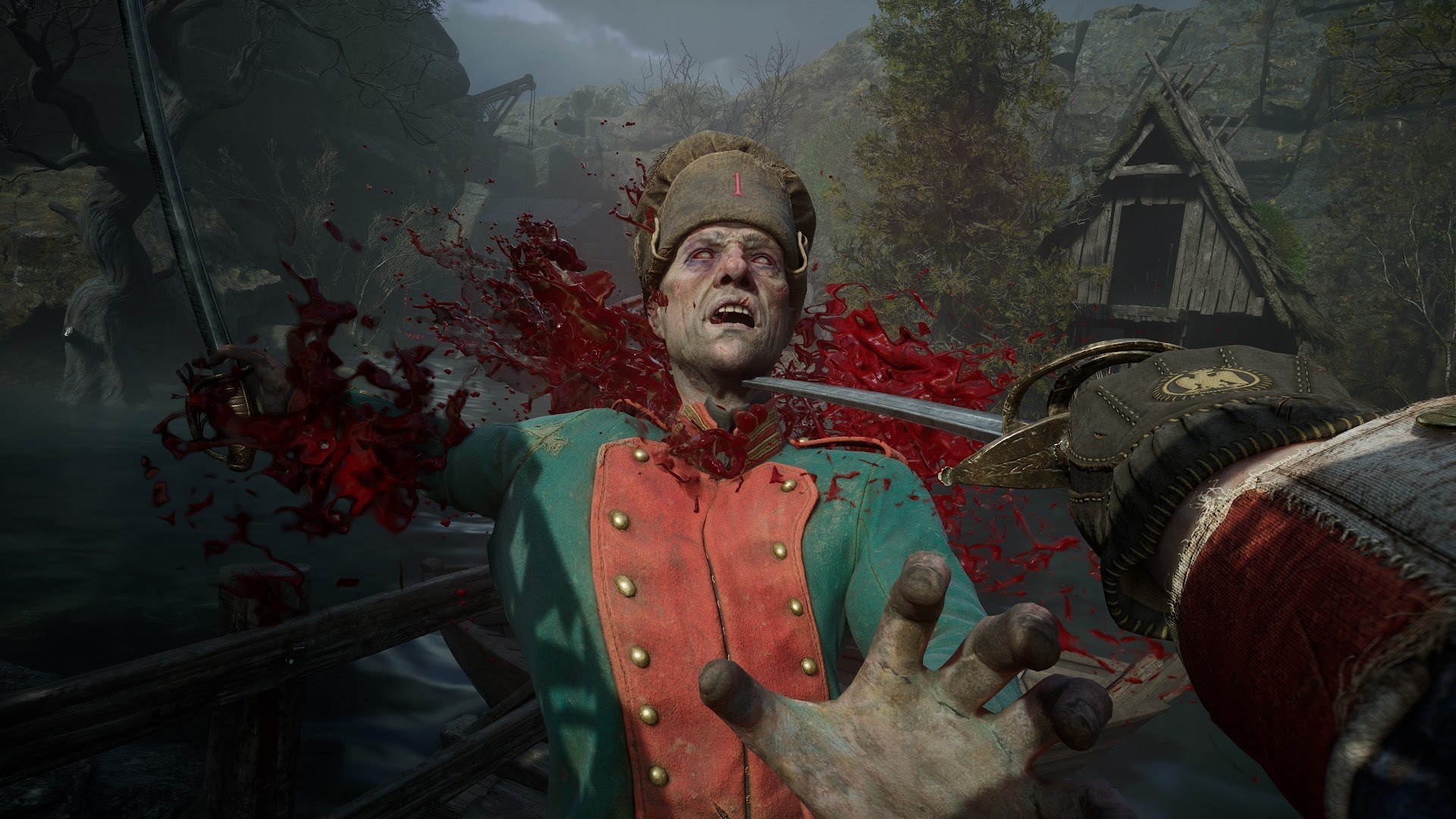
The hands-on assessment has a clearly identified build
Game Informer’s writer describes extended time with a preview build. His positive observations concern the mechanical foundation and environments, while the strongest criticism concerns uneven difficulty in important encounters. Presenting both sides accurately is more useful than extracting one sentence as a final recommendation for the released game.
The preview also describes weapon distinctions that match the developer’s rapier explanation. Those observations help explain what the writer played and why the combat interested him. They remain attributed experience from that build, rather than a claim that this site has independently completed and scored the final campaign.
Developer responses add context to the criticism
The studio’s demo-feedback update discusses combat readability, boss variety, CPU optimization and the balance of platforming with combat. Its September update gives a concrete example by moving General Lothaire’s campaign encounter later than in the demo. These written responses explain the development work surrounding the preview period.
They do not prove that every criticism has been eliminated in the final game. Instead, they identify changes and goals that can be read alongside the hands-on account. The rest of this page uses that context and the confirmed product details without inventing a numerical review score or an overall critic consensus.
What the hands-on preview actually says
Game Informer’s September hands-on article describes a preview build rather than a review of the released game. Wesley LeBlanc praises the combat foundation and environmental design while criticizing uneven difficulty, particularly in important encounters. Both parts matter when reading the assessment, because it is neither unqualified praise nor a numerical final verdict. Attributing the observations also identifies who made them and what kind of experience produced the assessment, keeping it distinct from an anonymous final verdict.
The writer also describes the sabre’s blocking role and the rapier’s weak-point attacks, providing observations about the version he played. Those details are useful alongside the developer’s explanation of the demo and balancing changes. They remain attributed preview observations, rather than a promise that every criticism or compliment applies unchanged to the launch build. That separation lets a reader compare the preview with the written changes while avoiding a claim that the site independently tested the same encounters.
The announced difficulty approach
In an interview published by Insider Gaming, One More Level said Valor Mortis would not have selectable difficulty levels on release day. The studio described its intended challenge as demanding while rewarding persistence and skill. Its recommendations emphasised perfect parrying and aggressive direct combat, explaining the kind of mastery the game is designed to encourage. The answer comes from a direct studio interview, so the absence of a launch difficulty selector is more than an inference from an early test.
The developer’s demo-feedback update also addressed combat readability, boss variety and the difficulty curve. These topics show that a fixed difficulty does not mean the team ignored balance feedback. They describe areas being refined during development, rather than a separate easy mode or a numerical comparison with another Soulslike’s difficulty. Keeping the launch policy separate from ongoing balancing work makes both statements understandable without assigning a difficulty setting that the studio never announced.
General Lothaire’s chapter placement
General Lothaire is a boss explicitly identified in the developer’s written updates. He appeared at the end of Chapter I in the Steam demo, after a short introduction to the combat system. The studio acknowledged feedback that this encounter was unforgiving for players who were still learning how a first-person Soulslike handles defence and positioning. The discussion identifies the encounter by name and by its position in the playable slice, supplying a concrete reference for the balance feedback.
For the full game, the developer places Lothaire at the end of Chapter II. Its explanation is that the player will have spent more time with the mechanics and progressed further before meeting him. That change is concrete information about the difficulty curve, although it does not supply his final health, a list of phases or an exact attack-by-attack strategy. Its confirmed location is enough to correct the order shown in a demo walkthrough without inventing a new explanation of the boss’s narrative role.
Why the demo differs from the campaign
The public Steam demo used specially adapted versions of Chapters I and VII. In the September development update, the studio explains that these levels were rebuilt for Steam Next Fest rather than simply copied from the finished campaign. Their chapter labels therefore describe the pieces used for the demo, not a complete route through the retail story. The modified structure explains why a guide can discuss a later chapter immediately after an introductory section without documenting the intervening story.
The developer also said that incorporating final-game optimization, balancing and fixes into those bespoke demo levels was not straightforward. This is why the demo’s presentation and difficulty need to be read as a particular build. A video recorded in that version remains useful historical material, but it does not establish the exact state of the game released later. The announcement gives a reason for comparing builds carefully, rather than assuming that an earlier recorded bug or difficulty spike describes every subsequent version.
Metacritic currently displays TBD
The retrieved Metacritic page displays TBD rather than a numeric Metascore or user score. It does not show a published critic consensus or a user-rating average in this research snapshot. TBD is a status indicating that a score is not displayed, so it should not be read as a score of zero or an unfavourable review. The displayed status is the answer available from that snapshot, rather than a number to replace with an estimate until a rating appears.
The separate details page lists the game’s release date and platforms. That metadata helps identify the title, but it is not itself a review and does not add points to a score. Keeping the details page and the rating display distinct prevents a release-date entry, an advertisement or a community prediction from being mistaken for a critical result. The distinction is especially useful before release, when a product can have an identifiable page without having a published numerical evaluation in its score field.
A first-person Soulslike, built around melee
Valor Mortis is a single-player action Soulslike from One More Level, the studio behind Ghostrunner. Its first-person viewpoint brings sword fighting, firearms and supernatural abilities into the same combat system. That combination is the starting point for understanding the game, because the presence of a gun does not turn the adventure into a conventional shooter. The official description names all three kinds of tools, so the basic identity does not depend on a speculative build or community nickname.
The developer places demanding combat at the centre of its description, alongside exploration and a supernatural story. William is a resurrected soldier rather than a character created from a selection of named classes. The official overview presents his weapons and powers as connected parts of his progression, giving the player several kinds of actions to learn during the journey. This gives the combat and exploration a shared protagonist and setting, while leaving specific quest outcomes to the campaign itself rather than promotional interpretation.
Sources and further reading
- Valor Mortis hands-on preview — Game Informer
- Responding to the biggest feedback from the Demo
- The Final Stretch - Development Update
- Difficulty interview — Insider Gaming
- Valor Mortis Demo is Available Now!
- Valor Mortis — Metacritic
- Valor Mortis details — Metacritic
- Valor Mortis — One More Level
- New Gameplay Overview Trailer and Official Voice Cast Reveal