
The latest availability notice takes precedence
The June announcement introduced the public demo and invited players to provide feedback. Later summer messages brought it back for events, continuing that development process. The September announcement then supplied a closing date, which is the relevant dated instruction for this pre-release snapshot.
Those notices describe different points in the demo’s history rather than contradictory promises of permanent availability. The closure update also explains why the studio stopped using that build as its main public example. It had incorporated improvements into the full game that were not straightforward to carry back into the modified demo levels.
Two selected chapters, rather than the whole story
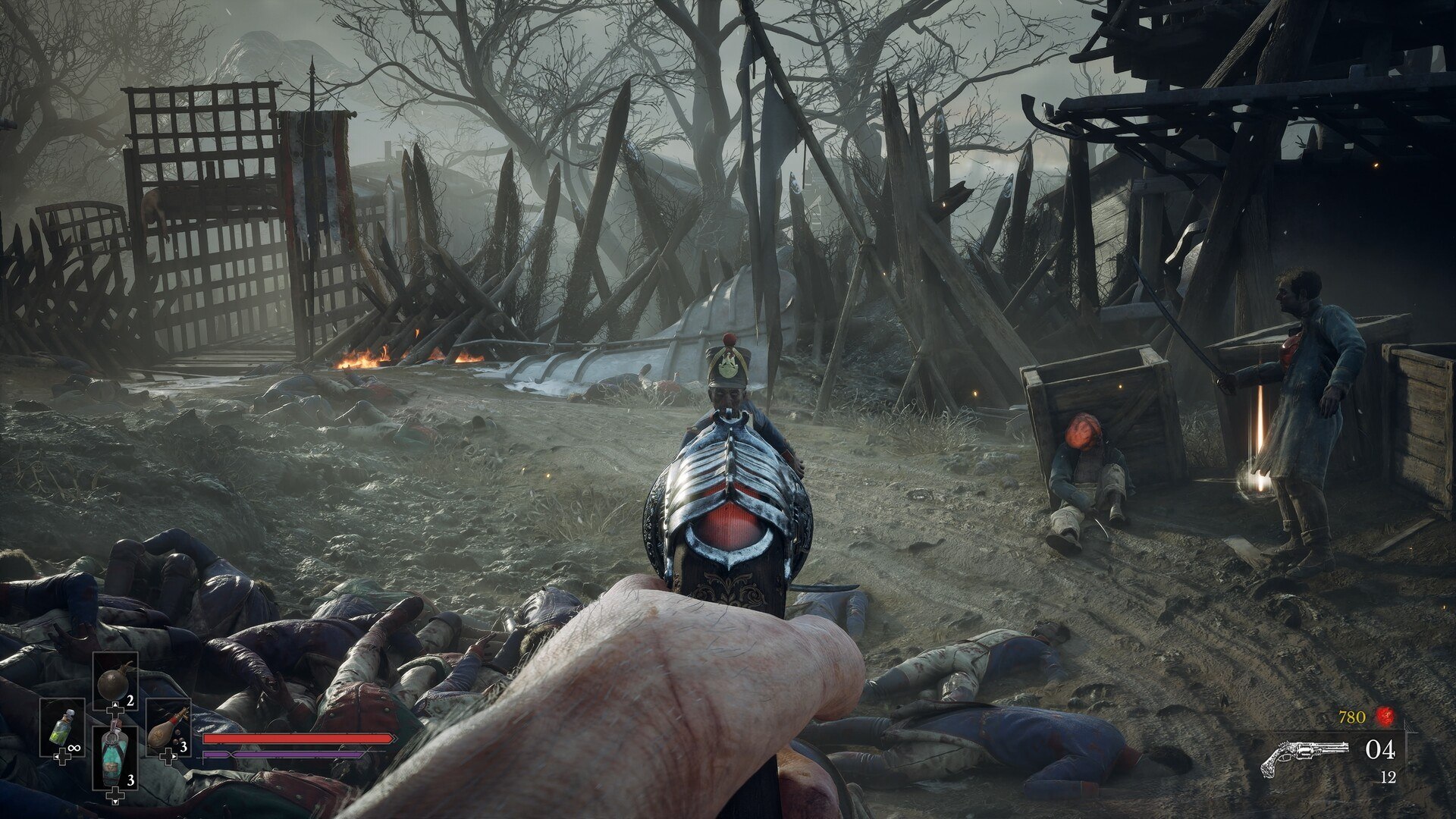
The first demo level was a battlefield introduction to combat, and the second expanded movement and equipment options. The developer says both levels were modified for the event. Their chapter labels identify the campaign pieces adapted for the demo, but they do not mean the player experienced every chapter between them.
That distinction also explains the large change in tools between the two sections. The demo was built to showcase different parts of the game, including movement powers and new equipment. It therefore provides useful historical information about mechanics without supplying a reliable campaign completion time or a full list of final encounters.
The Steam demo closed on September 8
The developer’s September 4 update announced that the Steam demo would go offline on September 8, 2026. That announcement supersedes the June launch message and later summer notices inviting players to download it. The latest dated statement is therefore the relevant reference for availability in this pre-release research snapshot. An older video can still include a download invitation, but the newer written announcement supplies the availability context needed to read it accurately.
The closure announcement also explains that the finished game had received substantial changes following player feedback. Because the demo levels were bespoke, they no longer represented the final version’s quality and polish. The historical demo remains part of the development record, but its old invitation to play is not a current download instruction. The closure is about that public playable version, while the official storefronts continue to identify the separate full product and its announced release.
Why the demo differs from the campaign
The public Steam demo used specially adapted versions of Chapters I and VII. In the September development update, the studio explains that these levels were rebuilt for Steam Next Fest rather than simply copied from the finished campaign. Their chapter labels therefore describe the pieces used for the demo, not a complete route through the retail story. The modified structure explains why a guide can discuss a later chapter immediately after an introductory section without documenting the intervening story.
The developer also said that incorporating final-game optimization, balancing and fixes into those bespoke demo levels was not straightforward. This is why the demo’s presentation and difficulty need to be read as a particular build. A video recorded in that version remains useful historical material, but it does not establish the exact state of the game released later. The announcement gives a reason for comparing builds carefully, rather than assuming that an earlier recorded bug or difficulty spike describes every subsequent version.
What the historical demo contained
The demo announcement describes two modified levels, beginning with a battlefield introduction to first-person combat. Its second level expanded the playable toolset with a rapier, a musket and a shield Transmutation. The developer also described grappling, wall running and swinging as movement mechanics used around broken routes and larger gaps. The selected levels were designed to demonstrate different systems, which explains the change in equipment and mobility across the demo’s limited progression.
This content illustrates how the game combines traversal with its melee, firearm and supernatural systems. The later rapier update explains the weapon’s precise-parry defence and its ability to attack weak points without a gun. These details describe what was shown in the demo, rather than promising that an archived recording covers the full campaign or every weapon upgrade. The documented additions establish that the playable slice expanded the toolkit, while leaving the finished campaign’s entire equipment catalogue outside that particular announcement.
General Lothaire’s chapter placement
General Lothaire is a boss explicitly identified in the developer’s written updates. He appeared at the end of Chapter I in the Steam demo, after a short introduction to the combat system. The studio acknowledged feedback that this encounter was unforgiving for players who were still learning how a first-person Soulslike handles defence and positioning. The discussion identifies the encounter by name and by its position in the playable slice, supplying a concrete reference for the balance feedback.
For the full game, the developer places Lothaire at the end of Chapter II. Its explanation is that the player will have spent more time with the mechanics and progressed further before meeting him. That change is concrete information about the difficulty curve, although it does not supply his final health, a list of phases or an exact attack-by-attack strategy. Its confirmed location is enough to correct the order shown in a demo walkthrough without inventing a new explanation of the boss’s narrative role.
Memory and tutorial crash fixes
Version 1.01 was the first published demo hotfix in June. It addressed crashes related to memory management and tutorial screens, alongside places where the player could become stuck in the environment. This is a list of developer-reported fixes for an identified build, so it is more specific than a general promise that a crash can be solved by changing any graphics setting. The developer names the affected systems, allowing an earlier report to be compared with a relevant patch rather than an unrelated troubleshooting suggestion.
The same update improved environmental performance in Chapter I and the General Lothaire encounter. It also adjusted Lantern interactions to make them more consistent across the demo’s two levels. These entries identify which systems received attention, but they do not establish that a later crash with a different message has the same cause. The precise version and feature references help identify the scope of the published fix without promising a repair for an undocumented retail-build error.
Block, level-loading and blood-effects fixes
The version 1.02 demo notes identify crashes caused by excessive player events and by blocking enemy attacks in particular situations. These are distinct symptoms with a published patch reference, rather than one undifferentiated performance issue. A report about the early demo is most useful when its version and triggering action are kept together. The recorded trigger is part of the useful information, because two crashes during the same session need not belong to the same listed issue.
Version 1.03 subsequently fixed a crash while loading the Witch Hunt level and another involving corrupted blood effects. It also mitigated looping audio after certain enemy kills and improved GPU autodetection. The notes support those historical fixes, without supplying a universal repair for the unreleased retail build or a reason to alter game files through an unofficial modification. This is a developer-reported change list for a particular version, and its status should remain attached to the build when citing the fix.
Sources and further reading
- The Final Stretch - Development Update
- Valor Mortis Demo is Available Now!
- Valor Mortis Demo is BACK for Summer events!
- Responding to the biggest feedback from the Demo
- Demo Hotfix (Version 1.01)
- Demo Hotfix (Version 1.02) - DLSS is Back!
- Demo Hotfix (Version 1.03)